
Ready to transform your vehicle’s stance? Upgrading your factory setup with new GR86 wheels completely redefines handling and aesthetics. Navigating through offsets, widths, and clearance dimensions can feel overwhelming initially. Discover essential fitment guidelines here to ensure safety, perfect sizing, and an incredible driving experience.
Choosing The Right GR86 Wheels
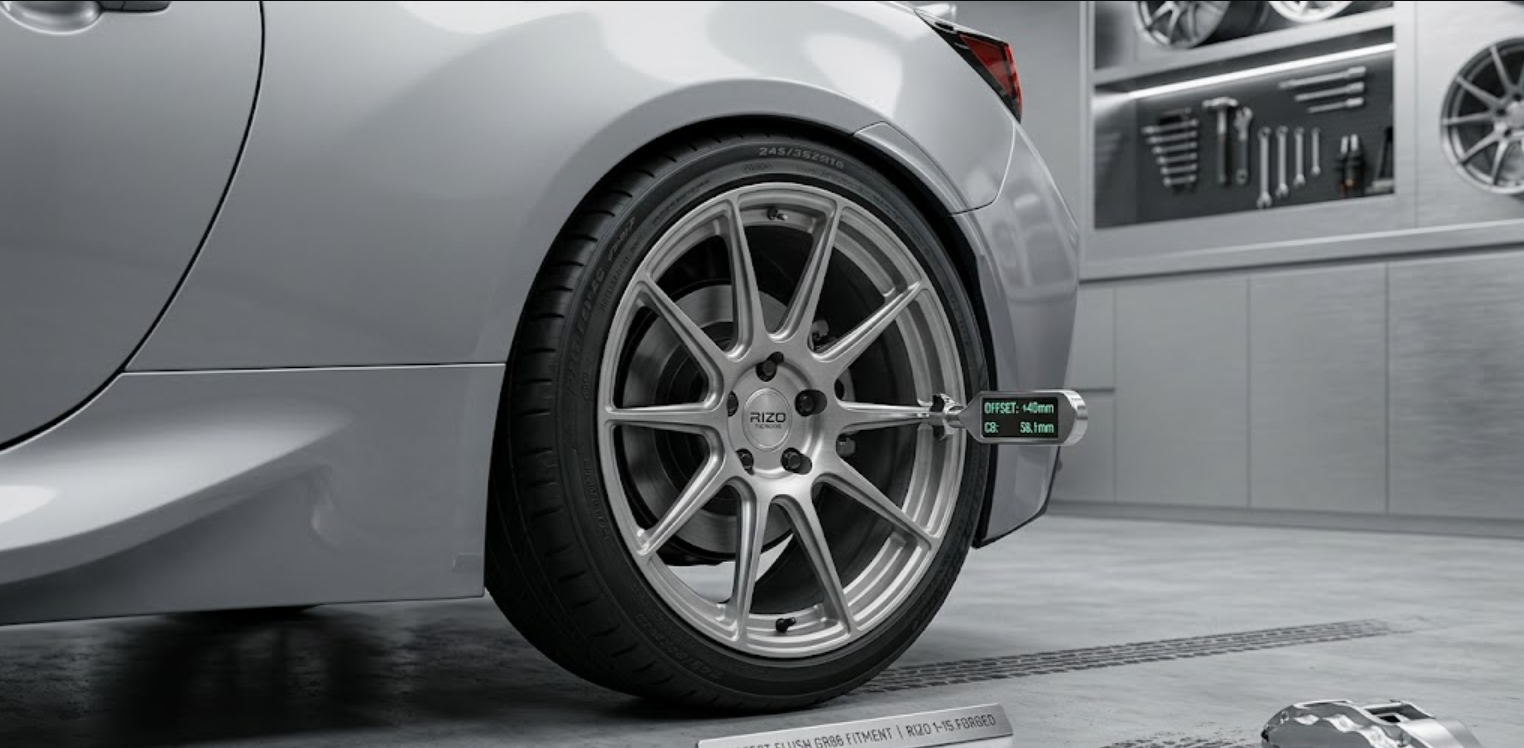
Having the knowledge of your GR86’s factory wheel specs is the first step in any aftermarket modification. This is to see what will fit and avoid the common problems of rubbing or speedometer miscalibrations.
Factory Wheel Sizes and Offset
Across the various GR86 trim levels, Toyota has differing wheel configurations. Offset indicates how far away the mounting surface is from the centerline of the wheel, and it affects both clearance and your car’s stance.
| Trim Level | Factory Wheel Size | Factory Offset |
| Base Models | 17×7.5-inch | +48mm |
| Premium Trims | 18×7.5-inch | +48mm |
| 10th Anniversary | 18×8-inch | +40mm |
Decoding Your Car’s Bolt Pattern and Hub Specs
In the case of any aftermarket wheel, fitment requires your vehicle’s mounting measurements to be matched precisely before you can install it without concerns for safety. When you mismatch these, your car experiences tremendous vibrations.
- The bolt patternis a universal 5×100mm across all GR86 models, which means that there are five lug holes arranged in a 100mm diameter circle.
- The center bore of these wheels measures 56.1mm exactly. This dimension will define how you center the wheel on your hub.
- Threading requires M12 × 1.25 with a torque spec of 103 to 120 Nm (76 to 89 lbf⋅ft).
OEM Tire Specifications
Factory tire sizes are equal to wheel diameter, and all factory combinations retain about a 24.7-24.8-inch rolling diameter. Standard tire sizes include 215/45ZR17 tires for standard models, 215/40ZR18 tires for higher trims, and 205/55R16 tires for Japan-only models.
Square vs Staggered Setups
The GR86 has matching wheel diameters front and rear. Staggered setups offer more rear grip to put power down and carry an aggressive look, but most experts still recommend square setups on this particular platform.
Benefits of Square Configurations:
- Improved tire life since square setups allow for the rotation of wheels in any direction you choose. Excellent options like the Rizo 1-15 Custom Forged Wheels are available in square sizes to maintain chassis balance.
- Chassis balance is preserved as equal-sized contact patches front and rear keep the chassis neutral.
- Upkeep is easier, as just one wheel size makes everything from tire rotations to replacements easy.
Perfect the Offset for Flush Fitment
Wheel offset defines how your wheels will be positioned inside or outside of the fenders. The offset is the distance from the mounting face of the wheel to the center line of the wheel. Lower offsets such as +35 push the wheels out for an aggressive look, whereas higher offsets like +48 tuck the wheels inward for a more conservative stance.
Your offset selection depends on the factors that you care about:
- General Driving:Keep that 5-10mm lower than stock (+38 to +43).
- Show Car Looks:You can lower your car 15-25mm more than stock (+23 to +33).
- Track Performance:Opt for 0–5mm from stock (+43 to +48).
We know that 18×8.5 wheels with a +45 offset or smaller will work on the GR86/BRZ super flexibly without any contacts. For a truly unique look, consider the Rizo Forged Custom Alloy Wheels Satin Silver Bespoke For Any Car, which can be custom-machined for your perfect track layout.
An 18×8.5 with an offset of +40 will hit the sweet spot if you are looking for wheels flush with the fenders. Anything lower than a +40 offset and you’re looking at needing more serious modifications or very careful tire selection.
For those who just want a wider stance without any fender modifications, 1 inch of width with about a -13 mm offset should do the trick. If you love a dramatic rear profile, the Rizo 1-6 HRE Style Custom Wheels for any car with wide lip offers incredible styling geometry.
Tire Selection And Speedometer Accuracy
Selecting your wheels leads directly to choosing the correct tires. Since the distance covered per each wheel revolution is altered, the overall tire diameter around the car affects speedometer readings.
Factory speedos are usually about 5% optimistic, which gives you a little leeway in tire size selection.
Stock-type tires should be very close in total diameter to keep your speedometer accurate. Lower profile tires provide sharper steering response but lead to a stiffer ride.
Tire Size Recommendation for 17″ and 18″ Wheels
The right set of tires can improve the GR86’s handling characteristics. However, as the wheel width increases, offset becomes an important consideration. A half-inch increase in wheel width often means reducing offset by 6-7mm.
| Wheel Diameter | Recommended Tire Size | Notes |
| 17×8-inch | 225/45-17 | Direct replacement size |
| 17×9-inch | 245/40-17 | Optimum for wider footprint |
| 18×9-inch | 255/35-18 | Requires front camber adjustment |
- 17-Inch Wheels:If your 17×8-inch wheels are utilizing a direct replacement, go with 225/45-17. For a wider contact patch, it is 235/40-17. The optimum for 17×9 wheels is 245/40-17. Those wanting to stay with smaller tires can use a wider size such as 255/40-17, which will fit within the fenders using enough negative camber adjustment.
- 18-Inch Wheels:The recommended setup for 18×9-inch wheels is generally a 255/35-18 needing around −2.5° of front camber. The mild-mannered 225/40-18 is also widely available.
All-Season vs Summer Tires
Your GR86 wears summer tires meant for dry and wet grip, but your local climate may call for the proper compound choice. All-season tires can be great options for drivers who experience varying weather conditions. In nearly freezing temperatures, summer rubber goes dangerously hard.
All-seasons maintain their flexibility and performance even in the coldest of circumstances, providing a measure of self-assurance in light snow.
Check Brake & Suspension Clearance
Always check clearance at full steering lock and compression. In stock suspension, the biggest consideration is front strut clearance. The only concern with wider wheels is tire-to-strut clearance at full lock. The second problem relates to tire contact with the fender or liner during hard cornering compression of the suspension.
Performance package models and vehicles with optional upgraded brakes require extra clearance checks to confirm that they can be operated safely. Common fitments like 18×8.5 ET40-45 usually mount without spacers. Big brake kits require wheel fitment measurements to confirm proper spoke clearance over larger calipers.
What You’ll Need For GR86 Wheels


Aftermarket wheels need supporting upgrades and the appropriate installation tools to maintain performance and safety. Get these necessities before you begin the installation:
| Hardware/Tool | Recommended Specification | Primary Purpose |
| Torque Wrench | 76-89 ft-lbs | Ensures even mounting pressure |
| Hub-Centric Rings | 56.1mm inner diameter | Centers wheel, reduces vibration |
| Lug Nuts | M12 x 1.25 Conical seat | Safely secures aftermarket wheels |
| TPMS Sensors | 315MHz frequency | Prevents dashboard warning lights |
- Torque wrench (set to the 76-89 ft-lbs / 103-120 Nm specification) and suitably sized deep socket.
- A floor jack and a secure pair of jack stands to lift the ride correctly.
- Hub-centric rings that allow aftermarket wheels with a bore larger than the GR86’s 56.1mm hub.
- M12 x 1.25 conical lug nuts (if your new wheels are called for, as opposed to the factory ball-seat nuts).
- 315MHz TPMS sensorsthat allow your car computer to receive tire pressure data without triggering dashboard warning lights.
The Beginner Buyer’s Guide: Common Mistakes That Trip You Up
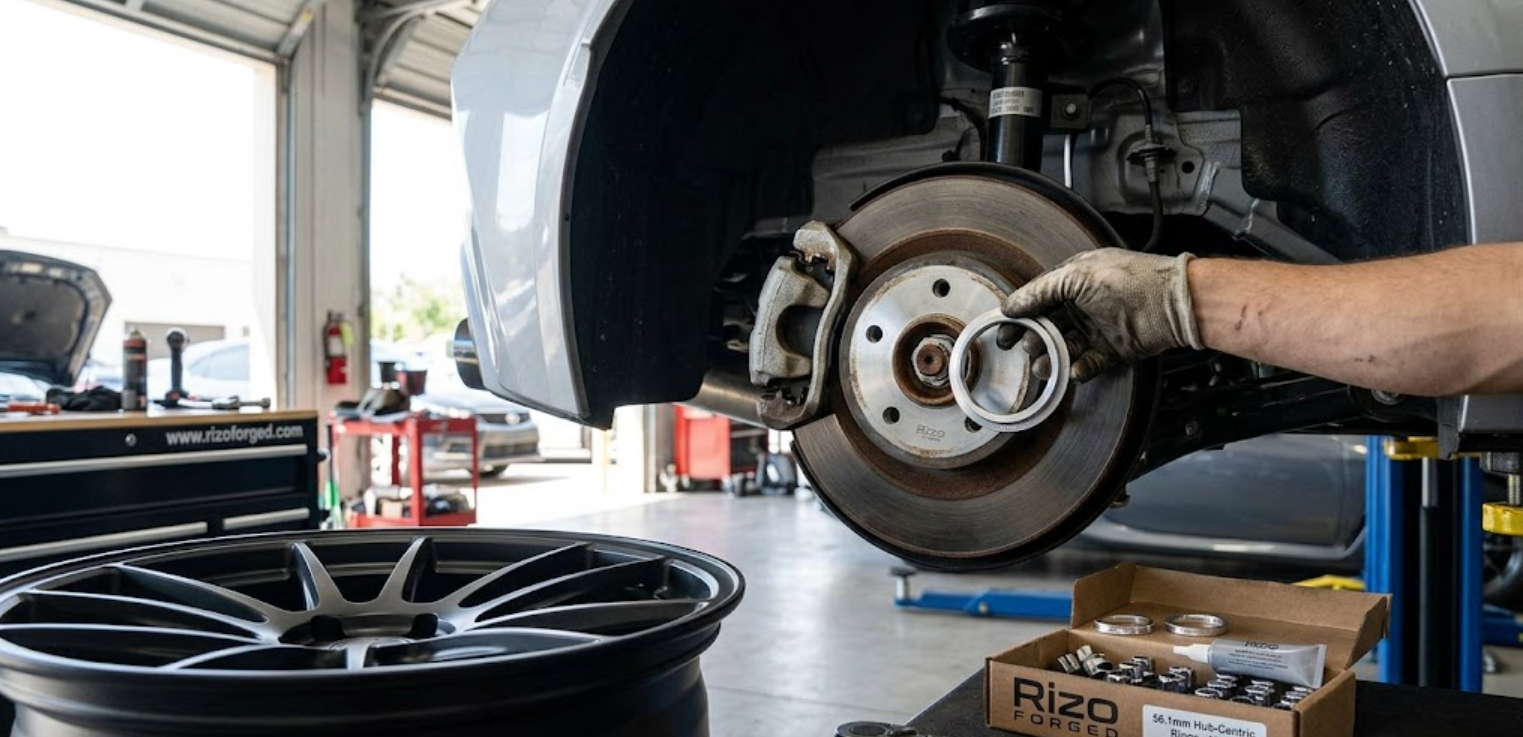
Skipping the Hub-Centric Rings
The GR86 56.1mm hub bore works with most aftermarket wheels with a larger center bore. Without the hub-centric rings, your wheels are relying solely on the lug studs to center the wheel.
That makes for vibrations at highway speeds all but guaranteed. Although conical lug nuts can center the wheel when you are tightening it, we recommend the use of hub-centric rings for best results.
Metal types last longer and handle higher brake temperatures, which is why I would recommend them for track drivers. Plastic rings are easier to remove during maintenance. Always use some form of anti-seize to prevent those rings from welding themselves onto your hubs.
Reusing Factory Lug Nuts with Aftermarket Wheels
Wheels and tires are crucial to your safety. Proper torque specification and hardware compatibility are necessary. Many factory wheels have a specific seat type, while almost any aftermarket wheel needs conical-seat lug nuts.
Mounting the wrong lug nuts will ruin the wheel mounting pad. Always use a calibrated torque wrench and tighten in a star-pattern to 76-89 ft-lbs for even pressure.
Forgetting TPMS Sensor Compatibility
You’ll need to make sure the TPMS sensors in your GR86 are compatible with whatever aftermarket wheels you go for; otherwise, you’ll end up with warning lights on the dashboard.
It consists of 315MHz sensors that interface directly with the vehicle’s computer. The car’s computer has to learn a different ID for each sensor you use, making it difficult to switch between multiple wheel sets.
Ignoring Strut Clearance for “Stance”
A lot of enthusiasts want something much meaner looking, and knowing where the line should be is crucial. If the offset is too high, or if you have a tire that is too wide, the inner lip or tire sidewall will rub directly against the front strut body.
Ensure precise clearance by choosing highly customizable multi-piece options such as the Rizo 2-Piece HRE Style Custom Wheels or the Rizo 1-6 Deep Dish Custom Wheels, which allow you to dial in your exact specifications.
People Also Ask
How Much Wheel Should One Have On The GR86 If They Do Not Want To Rub?
Wheels sized 18×8.5 with +45 offset or smaller will fit the GR86 without any rubbing on stock suspension. This setup allows plenty of room for the front strut and fender liner, even during spirited driving.
Should I Go With A Square Or Staggered Wheel Setup In My GR86?
A square setup (same-size wheels front and rear) is generally recommended for the GR86. This preserves the neutral handling characteristics devised by Toyota engineers, makes for easier front-to-back tire rotation, and gives the flexibility to drive any number of other mixtures in the rear. You can also do staggered setups, but that will compromise some of these benefits.
How Does Wheel Size Affect The GR86 Speedometer?
If using wheels that differ greatly in overall diameter from the original, this can affect your speedometer reading. For accuracy, stick as close to the original rolling diameter of ~24.7–24.8 inches with your new wheel and tire combination as possible.
What Are The Recommended Tire Sizes For 17 And 18 Wheels On The GR86?
For 17-inch wheels, depending on width, they are slightly wider like a 225/45-17 or 235/40-17. The setup used for 18-inch wheels typically pairs 255/35-18 with an 18×9-inch wheel. The sizes provide a good mix of fitment and performance for the GR86 chassis.
Do I Need Hub-Centric Rings When Installing Aftermarket Wheels On The GR86?
Hub-centric rings are not required when the wheel is tightened perfectly with conical nuts, but they do help on a lot of aftermarket wheels for the GR86. They aid in centering the wheel on the 56.1mm hub bore, which decreases some potential vibration at speed. Plastic rings are easier to unbolt and handle, while metal ones have a longer-lasting durability (but track work accordingly).
Conclusion
Achieving the ideal fitment requires careful planning and precise measurements. Selecting the correct offset guarantees your custom GR86 wheels deliver maximum performance without clearance issues. Proper installation ensures long-lasting safety on every single journey. Browse the premium forged selection at RizoForged today to elevate your vehicle’s aggressive look and enjoy an unmatched track driving experience.
 EN
EN  ES
ES  PL
PL  JA
JA  IT
IT