
Have drivers questioned why some cars boast an aggressive look, while others appear narrow and awkward? Getting that striking style requires exact custom wheel offset measurement. Adjusting offset dimensions will completely change the way vehicles handle. Most drivers want perfect brake clearance. Therefore, providing the correct specifications eliminates the dangerous risk of bad suspension rubbing.
The Basics of Wheel Positioning!
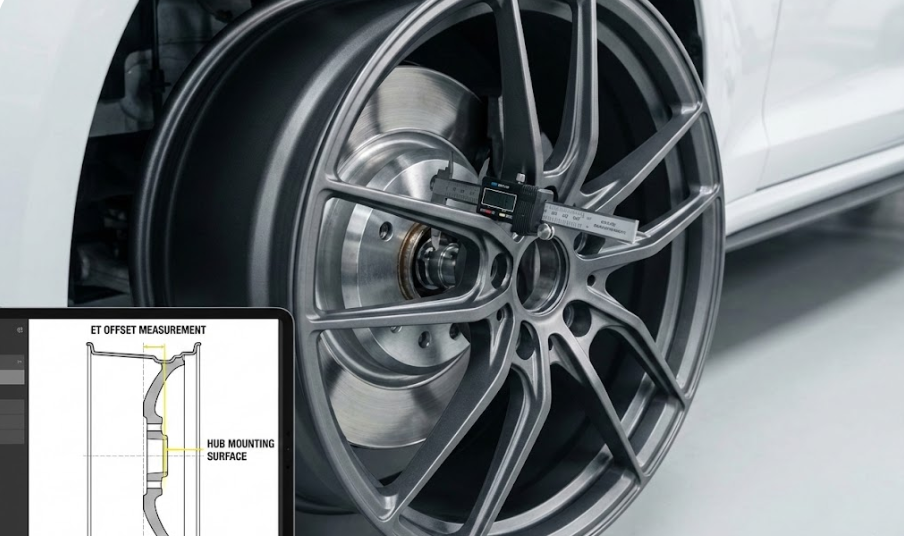
Understanding the exact measurement between the vehicle’s suspension system and the wheels remains highly important. Having the right measurement helps drivers achieve superior track performance and perfect aesthetics. Furthermore, looking through a Custom offsets gallery often provides great inspiration for an upcoming build project.
The core of this relationship involves a critical measurement that decides the final depth of a rim inside the fender. Indeed, exact measurements form the foundation of current stance engineering. Have fellow drivers ever struggled to find the perfect fit for a new project car? Personally, I once ordered rims without checking specs and ended up scratching my front fenders badly.
– The Essential Measurement
Offset uses the abbreviation ET from the German word Einpresstiefe. The German word simply translates to insertion depth. Usually, a reliable Rim offset chart clearly shows how the physical distance rests between the wheel’s centerline and the hub mounting surface. Additionally, the hub mounting surface serves as the flat area at the back of the rim. The flat surface directly touches the vehicle’s brake rotor hub to secure the entire assembly.
– The Centerline Principle
Drivers must define the centerline before determining the push or pull effect from the mounting pad. Think of a 10-inch wheel just like a large pizza. Consequently, the centerline forms an imaginary line running vertically down the middle at five inches on each side. Centerline measurements act as the absolute zero point for the entire wheel setup. Knowing the exact Offset wheels meaning helps builders understand how the pad placement matters. Ultimately, the mounting pad location determines if the outer rim pushes out towards the fender lip or pulls inward towards the suspension struts.
The Three Distinct Offset Variations!

Automotive engineers and aftermarket designers break fitment down into three distinct classifications. Controlling the exact fitment category ensures that the vehicle retains its intended dynamics safely. Furthermore, choosing the correct variation easily prevents tragic interference with delicate chassis components.
1. Positive Offset (ET+)
Positive offset happens when the hub mounting surface sits past the centerline towards the street side of the wheel.
- Structural Impact:The positive design configuration traps the complete tire assembly further into the tight wheel well.
- Common Applications:Manufacturers fit positive offsets from the +35mm to +55mm range on almost all contemporary front-wheel drive cars. Furthermore, modern all-wheel drive platforms and newer rear-wheel drive sports cars feature positive measurements.
- Engineering Purpose:Manufacturers use positive or negative scrub radius options and reduced aerodynamic drag while adjusting custom wheel offset designs. Therefore, engineers can ensure safe handling during dangerous tire blow-out events.
2. Zero Offset (ET0)
Achieving a zero offset means that the hub mounting pad perfectly aligns with the wheel centerline.
- Structural Implications:The zero design evenly distributes wheel mass to both sides of the central hub.
- Typical Use:Builders commonly use zero configurations in classic muscle cars and heavy-duty trailers. Additionally, fans of Fuel offroad styling often apply zero offsets on popular off-road SUVs.
- Engineering Purpose:The neutral offset gives wheel bearings and steering components a balanced load distribution. Consequently, drivers get a great balance between factory conservative fittings and aggressive aftermarket stances.
3. Negative Offset (ET-)
During a negative setup, the hub mounting pad moves closer to the suspension than the main centerline.
- Structural Implications:The negative configuration pushes the rim much further towards the outside edge. Therefore, the drastic change creates a wider track and delivers a desirable deep dish or concave look. Many truck owners love exploring Custom offsets options to find a bold new style.
- Typical Use:Mechanics commonly install Negative offset wheels ranging between -12mm and -44mm on lifted trucks or rock crawlers.
- Engineering Purpose:Moving the rim outwards provides sufficient clearance for heavy-duty suspension lift kits and large off-road tires. Do enthusiasts want to rub their expensive oversized tires on upper control arms? No one enjoys hearing a loud rubbing noise while steering sharply.
| Offset Type | Hub Placement | Spec/Chassis | Dynamics |
| ET+ (Positive) | Street-Side Bias | +35mm to +55mm (FWD/AWD) | Scrub Radius Shift, Low Aero Drag |
| ET0 (Zero) | 0.00mm Alignment | Classic RWD, HD Trailers | 50/50 Mass Dist, Neutral Load |
| ET- (Negative) | Suspension Bias | -12mm to -44mm (4×4/Lifted) | Wide Track, Max Clearance |
Custom wheel offset: Engineering Classifications & Metrics!
The Important Difference: Offset vs. Backspacing!
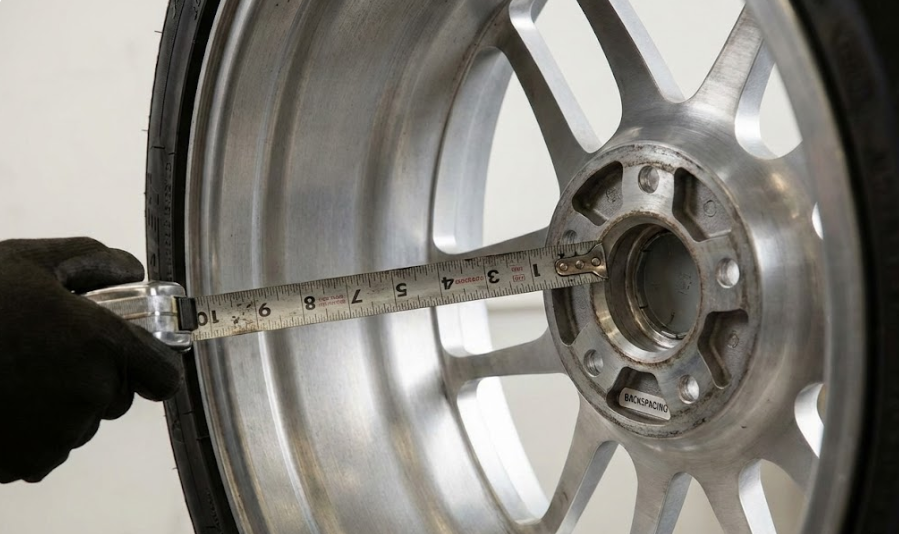
Failing to distinguish between offset and backspacing often leads to catastrophic failure when ordering Custom offset wheels. Both measures ultimately determine the final lateral position of the rim. However, the exact starting point and the specific units used to measure each dimension differ completely.
o Backspacing 101
Backspacing represents the physical distance from the innermost lip of the wheel to the hub mounting pad. The inner side faces the suspension components directly. Furthermore, mechanics always measure backspacing distances in inches. Offset and backspacing differ because offset uses an idealized centerline for math. Conversely, backspacing measures the area using actual physical reference points. Have drivers ever measured a rim incorrectly before buying expensive tires? A buddy of mine once ordered a massive set of Hostile wheels and miscalculated the backspacing completely.
o The Math Behind It
Professionals perform a very precise set of mathematical conversions when changing ET values to backspacing. One essential factor in the calculations involves the exact thickness of the flange. Experts typically assume the metal flange measures 0.5 inches thick.
To calculate backspacing for a wheel with a known width and offset:
- Dividethe total width of the rim by two.
- Add5 inches to account for the inner flange.
- Convertthe millimeter offset to inches by dividing the number by 25.4.
- Addthe new inch value to the total if the custom wheel offset was positive.
- Subtractthe new inch value if the mathematical offset was negative.
- Consider a 10-inch-wide wheel featuring a +25mm offset:
- Centerline plus Flange:5 inches plus 0.5 inches equals 5.5 inches.
- Offset Conversion:25 divided by 25.4 equals roughly 0.98 inches.
- Total Backspacing:5 plus 0.98 equals 6.48 inches.
Geometric Impacts of Altered Specifications!
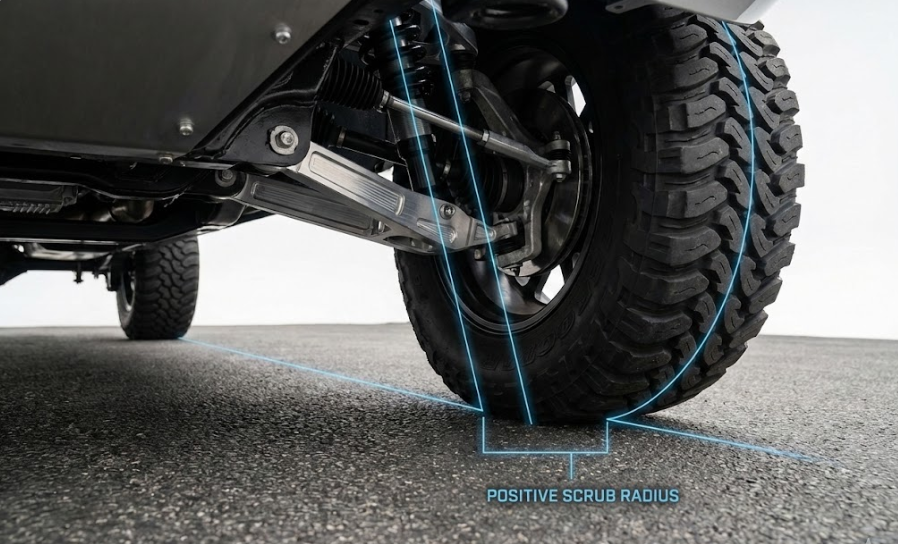
Changing a vehicle’s track width with aggressive rims goes far beyond a simple aesthetic upgrade. The drastic change makes serious alterations to how the vehicle’s suspension actually works. Checking out Custom Offset wheels on truck builds online shows how suspension angles shift dramatically.
A. Scrub Radius Changes
Scrub radius describes the distance at the road surface between the tire contact patch center and the Steering Axis Inclination line.
- Factory Design:Manufacturers design most new cars with a small negative scrub radius. The inclination line crosses the road before reaching the center of the tire. The small negative design gives cars more stability during hard braking.
- Aggressive Changes:Pushing tires outward with negative offsets changes the car to a positive scrub radius. A positive scrub radius leads to increased steering effort overall. Additionally, drivers experience more kick from the steering wheel over harsh bumps. A positive radius severely changes the way a car behaves during emergency braking situations.
B. Increased Load on Wheel Bearings
Engineers design hub bearings to handle a specific vertical load at a given horizontal distance.
- The Lever Arm Effect:Decreasing the offset moves the wheel outwards significantly. Consequently, the outward movement increases the lever arm distance between the tire gravity center and the bearing.
- Premature Failure:Moving a rim 50mm outwards from factory specifications increases dynamic stress on the bearing housing. Furthermore, the intense stress damages ball joints and tie rods quickly. Accelerated component wear forces mechanics to perform expensive replacements much more frequently.
C. Fender and Suspension Interference
Builders must consider three-dimensional custom wheel offset clearance before finalizing any aggressive stance project.
- Inner Clearance:An excess of positive offset causes the inner barrel and tire sidewall to collide with internal parts. The sidewall easily smashes into the Mac Pherson strut housing or upper control arms.
- Outer Clearance:An excess of negative offset causes the outer tire tread to collide with the metal fender arch. The collision happens quickly during suspension compression or tight steering maneuvers. Therefore, owners must perform significant fender rolling or add widebody fender flares to prevent damage.
Step-by-Step Precision Measurement Protocol!
Enthusiasts often need to measure everything closely before confidently ordering fresh components. The following helpful guide consists of specific steps to confirm rim measurements perfectly.
· Necessary Items
- Builders need a precision straight edge longer than the rim diameter.
- Mechanics require a reliable metric tape measure or a sharp digital caliper.
- Enthusiasts must find a completely flat and level working space.
· Steps to Take Measurements
- Dismount and position:Mechanics remove the tire from the rim for ultimate accuracy. Next, place the standard rim face down on a perfectly flat surface.
- Determine overall width:Measure from the extreme outer edge of the rear flange to the front flange edge. The overall width generally measures one inch greater than the stated width.
- Centerline calculation:Divide the absolute overall width by two. Builders must document the exact mathematical result carefully.
- Measure backspacing:Place a straight edge perfectly flat across the rear flange. Measure straight down to the flat hub mounting pad from the bottom edge.
- Apply the formula:Subtract the centerline measurement directly from the backspacing
A positive offset exists if the final number remains greater than zero. A negative offset exists if the final number falls below zero. Finally, multiply the last inch measurement by 25.4 to convert the length to millimeters. Reading an accurate custom wheel offset guide prevents bad math.
The Manufacturing Advantage: Forged Construction!

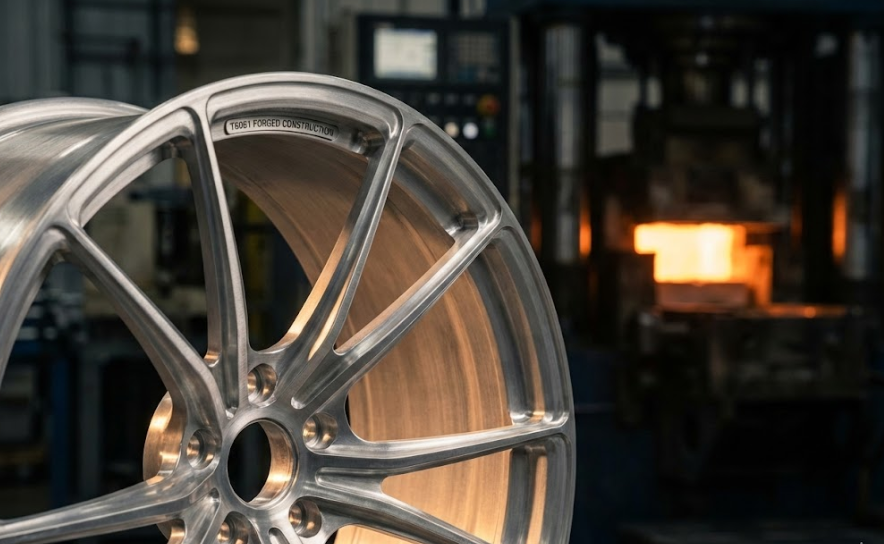
Every custom wheel offset directs heavy driving forces straight into the core construction. Deep offsets create high negative values naturally. Therefore, the physical construction must utilize high levels of metallurgy so the unit maintains structural integrity safely.
§ Cast vs. Forged Density
Factories create gravity cast aluminum structures with dangerous microscopic holes inside the metal. The tiny air gaps weaken the overall strength of a cheap rim. If drivers place extreme loads on the rim, the holes quickly become a point of failure. The fragile metal simply cracks under extreme torsional twisting forces.
§ Aerospace Grade Engineering
Premium custom wheels utilize T6061 aerospace-grade forged aluminum blocks. Next, specialized computers CNC machine the strong aluminum into beautiful shapes. The distinct advantage of the forging process remains unmatched. The raw metal goes through extreme temperature and pressure inside the factory. The intense pressure causes the internal metal grains to line up perfectly while eliminating tiny holes.
Therefore, a forged rim offers up to three times the strength of a cast version. The strong aerospace material weighs significantly less than cast aluminum wheels. Forged construction remains the only suitable option for high-horsepower vehicles running aggressive, low-offset fitments.
Multi-Piece Wheel Architecture and Customization!
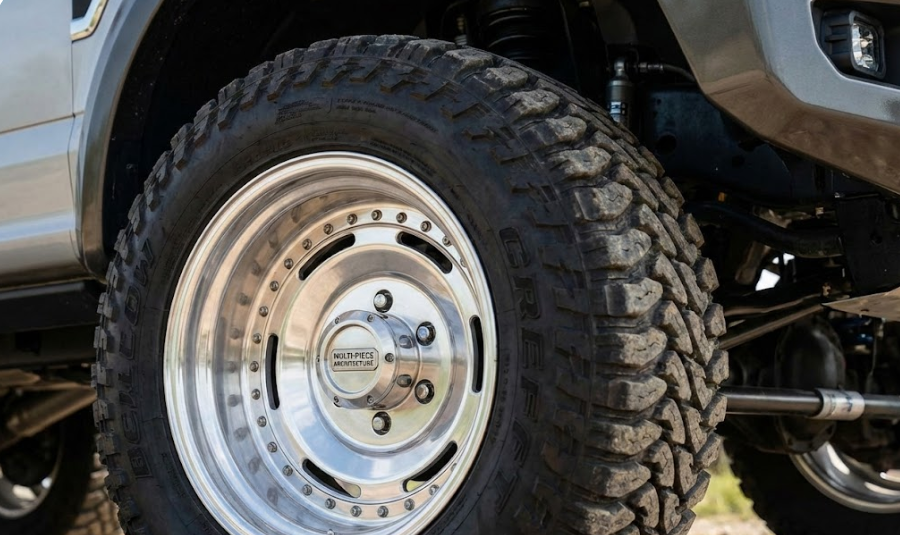
Vehicle owners often desire precise control over specific offset designs. The ultimate choice for total control involves utilizing two-piece and three-piece forged wheels. The modular styles beautifully showcase the very best elements of modern vehicle design. Checking out massive TIS wheels on customized trucks highlights modular design benefits perfectly.
– 2-Piece Configurations
Two-piece wheels feature a solid forged center unit. Mechanics weld or bolt the center face directly to a spun aluminum barrel. Consequently, the manufacturer can set the center face at almost any depth within the barrel before final assembly. The flexible process provides perfect customization in precise millimeter increments. Factories avoid needing to make completely new casting molds for every single order.
– 3-Piece Configurations
Three-piece wheels utilize a forged center face sandwiched securely between an inner barrel and a removable outer lip. Mechanics seal the pieces with aerospace-grade silicone and lock everything together using titanium bolts.
- Infinite Adjustability:Owners completely change the offset and width by simply replacing the outer lip with a wider piece. The truck upgrades to a new widebody configuration without requiring a whole new set of rims.
- Repairability:Hard road debris sometimes damages the beautiful outer lip. Fortunately, mechanics quickly remove and replace the broken outer lip alone. Replacing just one modular section brilliantly protects the total value of the investment.
Conclusion
Mastering vehicle stance means dotting every single letter in critical vehicle measurements. Getting the right custom wheel offset easily eliminates dangerous clearance issues. Furthermore, track enthusiasts deserve maximum accuracy for intense performance. For premium forged wheels that meet exact performance specifications, go to RizoForged today to get the custom wheel of your dreams right now.
Key Questions About Fitment Engineering!
Fitment engineering involves detailed math and proper measuring techniques. Let us answer some highly common questions about selecting exact rim sizes today.
What If I Have The Wrong Offset?
Using the wrong offset creates massive clearance problems immediately. Rims featuring too much positive offset will drive straight into the suspension struts and brake calipers. Conversely, excessive negative offset makes the rims smash into the outer fenders while cornering sharply. The destructive interference shreds expensive tires and destroys wheel bearings permanently.
Can Wheel Spacers Fix My Offset?
Wheel spacers occasionally fix a positive offset that sits too high. The spacer pushes the rim outward and effectively lowers the offset number. Using strong Bora wheel spacers provides a safe fix for minor positive fitting issues. However, excessive negative offset cannot be fixed with any spacer. The rim cannot pull inward any further once the metal reaches the mounting hub.
Are OEM Wheels Forged Or Cast?
Most OEM factory wheels use simple cast aluminum material. Factories use gravity or low-pressure casting methods because the process keeps mass production costs low. High-end exotic supercars and high-performance track packs serve as the only rare exceptions. Factories forge exotic supercar rims directly to withstand extreme cornering forces on the race track.
How Does Wheel Width Affect Offset?
Offset always relates directly to the physical centerline of the wheel. Increasing the rim width by one inch keeps the offset number exactly the same. However, the wider rim moves 12.7mm closer to the suspension and 12.7mm closer to the fender. Therefore, builders must calculate both width and offset numbers carefully before buying anything.
What Does ET Mean On A Wheel?
ET stands as the short abbreviation for Einpresstiefe. Einpresstiefe represents a classic German engineering term meaning insertion depth. Factories stamp the ET code on the majority of modern rims in a format like ET45. An ET45 stamp simply means the rim contains a positive 45mm offset distance.
 EN
EN  ES
ES  PL
PL  JA
JA  IT
IT