
Do your factory rims restrict your vehicle’s full potential? Upgrades can change everything, and going to a professional wheel shop is important. For precise handling, proper fitment is critical. New materials can improve speed. Upgrades also speak to the owner’s personality. Advanced technical knowledge helps avoid errors. Precision engineering can unleash a wheel’s hidden potential. RizoForged offers precision parts.
The Essential Physics: Unsprung Mass and Rotational Inertia!
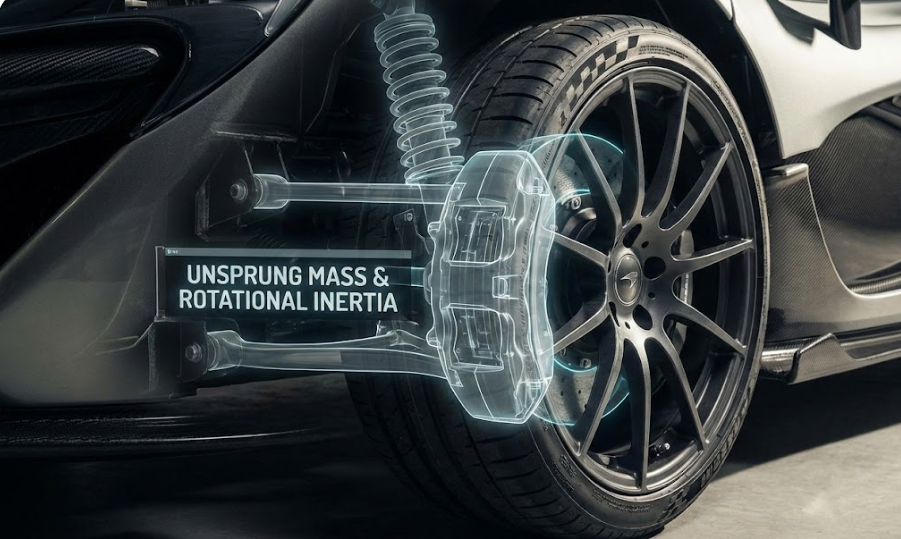
o What Is Unsprung Mass?
Unsprung mass refers to the weight that is not supported by the vehicle’s suspension system and includes the wheels, tires, and brake components. Furthermore, there are also a number of factors that contribute to the responsiveness of a vehicle’s suspension system:
– The weight of the components.
– The condition of the system.
– The width of the tires.
– The traction of the tires.
– The size of the tires.
All of these can affect the performance of the vehicle’s suspension system. In addition to these points, I remember when I first swapped my heavy stock rims for lighter options and felt the car breathe again. Have you ever noticed how much lighter your steering feels after removing heavy baggage from your trunk?
o Rotational Dynamics
Better handling comes from a decreased rotational mass, allowing your suspension to work more effectively for an accurate cornering. The formula I=mr2 dictates that with less mass at the outer circumference of a rotating cylinder, less energy will be required to change its velocity.
o Deceleration And Acceleration
Improved braking comes from there being less mass to slow down. In addition, lighter wheels require less effort to spin up and down. According to Car and Driver, “Reducing unsprung weight is one of the most effective ways to improve a car’s handling and ride quality.”
Decoding Manufacturing Materials and Structural Integrity!

Navigating the aftermarket sector begins with knowing which material is best for your wheels. This will impact cost, handling, ride quality, fuel efficiency, and durability to road hazards.
1. Steel Wheels: The Heavy-Duty Workhorses
Steel wheels offer an unbeatable durability to cost ratio.
- Manufacturing Cost:They cost 70-80% less than alloy wheels.
- Durability Scenario:Winter driving, off-road use, and heavy-duty work trucks are ideal use of steel wheels as they are extremely resistant to road salt. In addition, a steel wheel is more liable to bend than crack, which allows the driver to keep driving after a serious impact from a deep pothole.
- The Weight Penalty:The most obvious downside is the weight; steel wheels are far heavier than aluminum (about 2.5 to 3 times heavier for wheels of the same size). This added weight negatively affects acceleration, braking, and handling.
2. Cast Alloy (Aluminum) Wheels: The Industry Standard
Alloy wheels are preferred for their price, looks, and performance.
- Thermal Dynamics:Primarily made of cast aluminum, they dissipate heat more efficiently than steel, which keeps your brakes cooler and performing better.
- Manufacturing Process:The majority of factory wheels are made of cast aluminum (about 90%). This is a cheaper process, but when the aluminum cools, it can leave tiny pockets of air and weak spots.
3. Flow-Formed Wheels: The Middle Ground
- Description:Also known as a rotary-forged, a flow-formed wheel is made somewhere between a cast wheel and a forged wheel.
- Process:They start with a cast center, and then heat and pressure are used to shape the outer barrel.
- Advantage:This process creates wheels that are 15-25% lighter than standard cast wheels, and also stronger, since it better aligns the aluminum’s grain structure. This means flow-formed wheels will give you the most value for your money.
4. Forged Aluminum Wheels: The Best Engineering Can Buy
Forged wheels offer the best technology in wheels. Leading companies such as RizoForged manufacture quality products made out of T6061 Aluminum which is known for reliability and versatility.
- The Forging Process:The difference is in the method. Rather than pouring liquid aluminum into a mold like casting does, the forging process begins with a solid block of aerospace-grade aluminum, which is usually the 6061-T6 alloy. That block is subjected to extreme heat and pressure, sometimes up to 8,000 to 10,000 tons of pressure. This process aligns the grain structure of the metal, as a result, making the final product much lighter and significantly stronger than a cast wheel.
- Performance Metrics:Forged wheels are the top choice for professional racers as they have the best strength to weight ratios. This is because every ounce of weight saved improves the cars handling, acceleration, and braking to make it more responsive to the driver’s commands.
- Precision Machining:After forging, the wheel is machined into the desired final shape, and polished to a mirror finish to hide any tool marks.
I once saw a set of forged rims survive a track day that shattered the confidence of lesser wheels. Do you prioritize long-term durability or immediate cost savings when you shop for car parts? As Road & Track states, “Forged wheels are the gold standard for strength-to-weight performance in the automotive industry.”
The Anatomy of Perfect Fitment: Critical Dimensional Parameters!
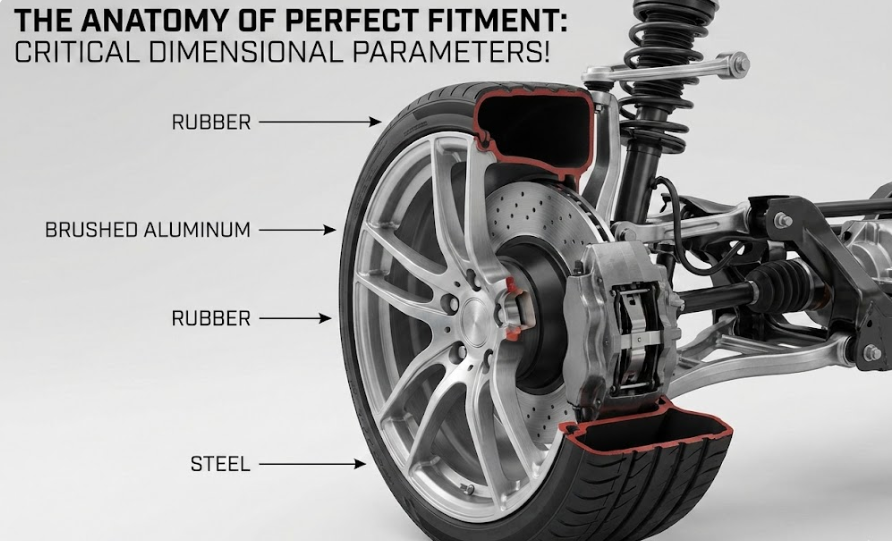
Fitment is the most critical factor concerning the safety and functionality of the wheels. With perfect fitment, the wheels are guaranteed to align within the vehicle. Fitment ensures the wheel does not rub against the wheel well, hindering the handling or compromising the safety of driving.
A. Diameter And Width
- Diameter:When measuring the diameter of a wheel, take a tape measure and measure the distance from one bead seat to the other bead seat. When measuring, the wheel should be laying flat and centered to the tape measure to avoid measuring the lips of the wheel on either side.
- Width:Width is the distance between the two inner bead seats. This measurement impacts tire fitment as well as the overall handling of the car.
B. Pitch Circle Diameter (Bolt Pattern)
The bolt pattern (PCD) is the most important specification of a wheel. It is the amount of lug holes and the distance that lies between each of them (i.e. 5×114.3).
- Measurement:For four-lug wheels, you measure straight across from the center of one lug hole to the center of the opposite lug hole. Five lug patterns are more complicated as you measure from the outer edge of one lug hole to the center of the lug hole that is directly opposite to it.
- Compatibility:If the PCD of a wheel does not match with the vehicle hub, then that wheel will not be able to be mounted onto the vehicle.
C. Center Bore And Hub-Centricity
The center bore is the hole that is machined at the center of the wheel to fit around the vehicle’s hub.
- Hub-Centric Fitment:Factory wheels on most modern vehicles are designed to fit around the hub. This creates a uniform centering of the wheel and tire assembly every time it’s attached to the vehicle.
- Hub-Centric Rings:Hub-centric rings are designed to fill the gap when the bore in a wheel is bigger than the hub. They also eliminate excessive vibrations at highway speeds. Without rings, your wheels are only centered by the lug nuts, which can cause lots of vibrations.
D. Offset (ET) And Backspacing Geometry
These measurements determine how far your wheels will stick out or tuck in.
- Offset Calculation:Offset is the distance from the center of the wheel to the center of the wheel’s mounting surface, which is usually indicated by the letter “ET” in the measurement of millimeters.
- Positive vs. Negative:A positive offset means that the mounting surface is shifted inward and the wheel will sit recessed or “tucked” in. In contrast, a negative offset means the mounting surface is shifted outward, resulting in a “deep dish” appearance.
- Consequences of Error:Incorrect offset can cause tires to rub against fenders or suspension components.
| Parameter | Measurement Unit | Technical Definition | Fitment Impact |
| Diameter | 16″ – 24″ | Distance between bead seats | Brake clearance/ride profile |
| Width | 7.5J – 12.0J | Inner bead seat distance | Tire contact patch/grip |
| PCD | 5×112 / 5×114.3 | Lug hole layout diameter | Hub mounting compatibility |
| Offset (ET) | -45mm to +55mm | Centerline to mounting face | Fender/suspension clearance |
Wheel Shop Technical Fitment Guide!
Advanced Wheel Architectures: 1-Piece vs. Multi-Piece!
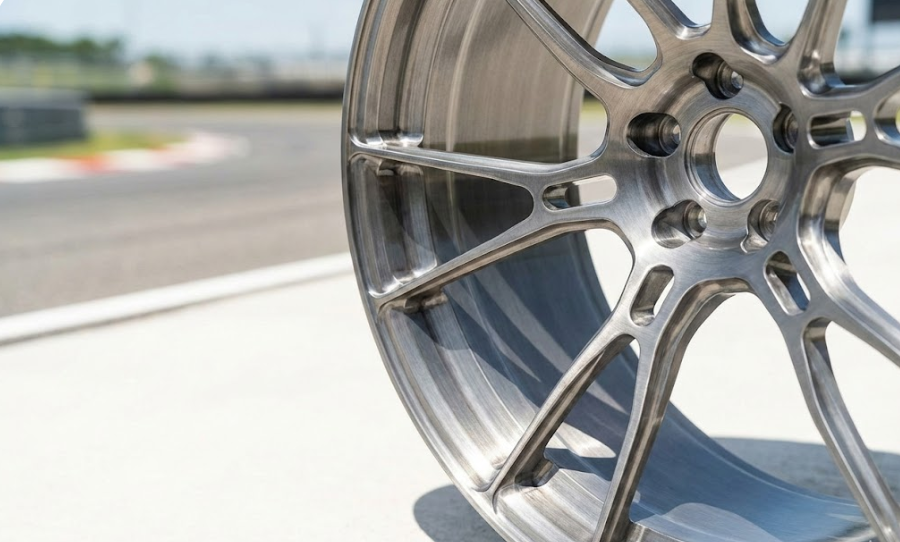
– Monoblock (1-Piece) Forged Wheels
When compared to casted wheels, monoblock forged wheels offer greater strength and less weight. They are made from a single solid piece of forged aluminum, giving them the best structural rigidity for the track and high-performance daily driving.
– 3-Piece Forged Wheels
3-piece forged wheels offer amazing strength and lightweight characteristics.
- Construction:They are made from three separate components: a fully machined center section, a nice outer rim lip, and a strong inner barrel. The inner barrel is made out of a lighter construction material, such as aluminum or titanium, making them lighter than 2-piece forged wheels.
- Repairability:Having damage to your wheels is no longer an issue. You can replace a damaged portion of a wheel instead of having to buy a completely new wheel.
- Customization:3-piece forged wheels offer greater fitting options than monoblocks, subject to their inner barrels, which are available in a variety of widths and offsets.
Custom Wheel Styles and Aerodynamics!
Style allows you to express your individuality and create a visual impact. A strategically selected set of aftermarket wheels can transform an average vehicle into something remarkable.
- Multi-Spoke Wheels:Multi-spoke wheels have a sophisticated look, and help with brake heat dissipation, better suited for high-end cars like the Mercedes-Benz S-Class and Audi A8.
- Five-Spoke Wheels:Five-spoke designs are a classic, sporty choice that’s easy to clean.
- Concave Wheels:Spokes that run from the outer rim to the center of the wheel and curve in deep give a wheel a bold and aggressive look. Such wheels are often designed to create a clear distinction between the front and rear wheels by emphasizing a notable difference in concave depth of the rear wheels.
- Deep Dish Wheels:As the name suggests, deep dish wheels have a design that features a large lip, with a center that is recessed to give the wheel a wider appearance. Because of this unique design feature, the area behind the wheel spokes is large enough to accommodate and fit larger brake components.
The Science of Sizing: Plus Sizing vs. Minus Sizing!

Wheel diameter adjustments are referred to as either plus sizing or minus sizing in the industry.
ü Plus Sizing For Performance
Plus sizing is the practice of fitting larger diameter wheels with tires of lower profiles so as to keep the total tire diameter constant.
- Pros:This increases your wheel diameter while reducing tire profile, which sharpens handling because less tire flex. This looks better. Plus, with bigger rims, you have more room for bigger brakes, which means stopping will be safer.
- Cons:Increased risk of pothole damage and a stiffer ride because a thinner sidewall has less cushion for bumps and uneven roads.
ü Minus Sizing For Utility
Minus Sizing does the opposite and uses smaller diameter wheels and higher profile tires to create less overall diameter.
- Pros:This is great for creating more comfort on the ride, and is a more popular choice for winter or off-road setups.
- Cons:The biggest issue is with potential clearance problems for large brake calipers.
Quality Control, Testing, and Certifications!
When visiting a wheel shop, checking their certifications is an absolute must in order to guarantee a safe product. Testing is consistent among trusted manufacturers.
- Simulations:Engineers will design the wheels by hand in 3D and run proper tests to simulate all of the real stresses involved so that the final design has the optimum strength and performance.
- Physical Testing:With the most modern equipment available, such as radial and rotary testing machines, for example, the factories testing wheels will leave no room for any untested defects on any forged wheels.
- Global Certifications: According to Velgen Wheels, SAE, JWL, and VIA are widely recognized standards.These are the certifications that your wheels should have.
Financial and Legal Considerations of Upgrading!
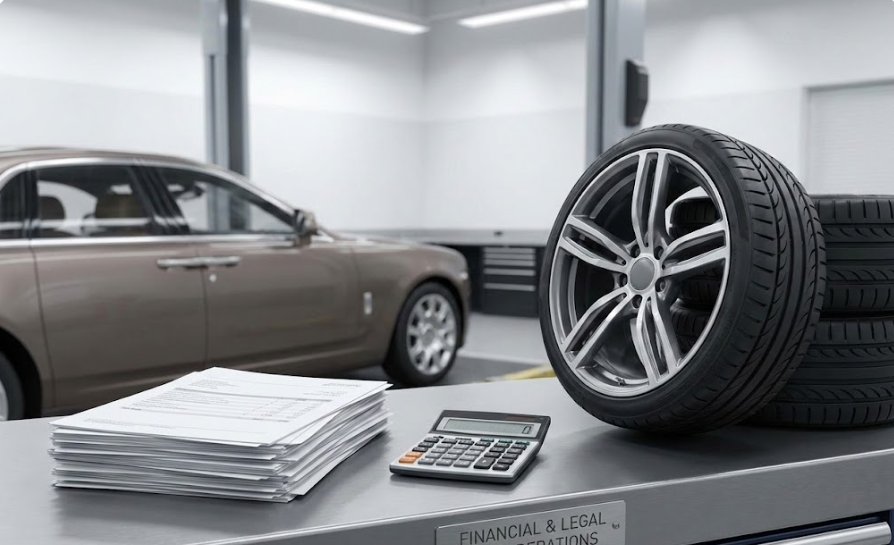
o Budgeting For Your Setup
Smart budgeting is looking beyond just the wheels. Quality aftermarket wheels tend to be 300-500 dollars per wheel, and forged designs can be even more expensive.
- Hidden Costs:New wheels may require new tires, leading to hundreds or thousands of additional dollars to your project. Installation fees include the mounting and balancing of the wheels and the disposal of your old tires.
- Suspension Adjustments:If the wheel size or offset changes significantly, it will be necessary to perform an alignment or several other adjustments to ensure that all the components function correctly.
o Insurance And Legalities
Wheel safety standards do have federal regulations (FMVSS No. 110 and 120), which concern how tires and wheels should be properly matched in size. Also, aftermarket modifications are not included in insurance policies unless the insurance company is notified of modifications. If this is not done, the insurance claim will be denied, and the policy will be canceled. Many insurance companies allow for coverage of aftermarket wheels, usually up to 5,000 dollars.
Premium Finish Maintenance Protocols!
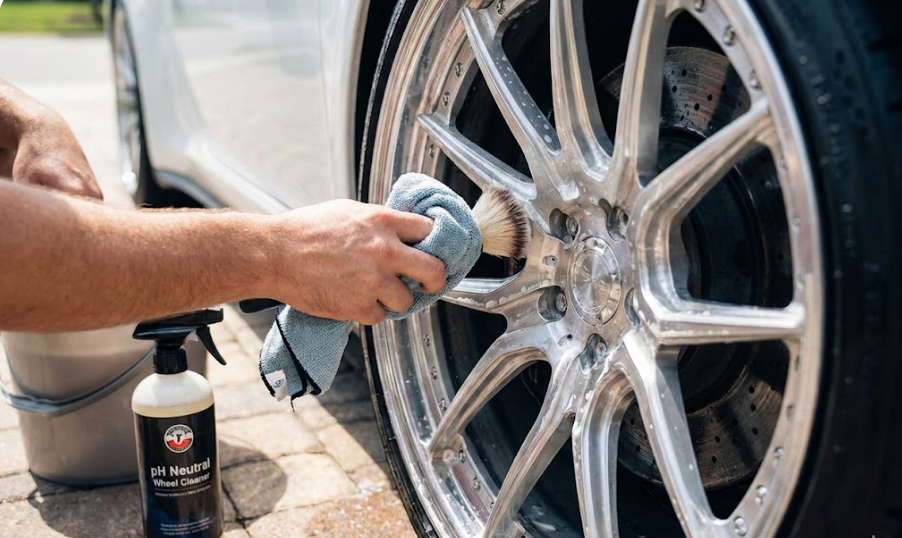
Aftermarket wheels require proper maintenance to protect your investment, and with the right technique, it is really simple to do so.
§ How To Maintain Wheel Finish?
Etching wheel finishes is caused by brake dust, so be sure to clean your wheels regularly! It is best to clean your wheels with pH neutral cleaners or gentle soap and water. Anything harsher can damage your wheels even more.
§ Surface Protection
Applying wax or sealant to your wheels will make cleaning them much easier by creating a barrier against the buildup of dirt, brake dust, and salt.
§ Hardware Checks
Make sure your lug nuts are tightened to the manufacture specification to avoid significant issues. After the first installation and then after every 50 to 100 miles, check to make sure your lug nuts are tightened.
Conclusion
Knowing wheel specs is beneficial for the vehicle’s performance. Adhere to the fitment guidelines as they are important. The material used will affect the unsprung weight. Choose a wheel setter for custom forged wheels. Custom made wheels improve drivability, and if done right there will be no vibration. RizoForged – a pro wheel shop has wheels to improve your car and an engineering team for your needs.
Most Commonly Asked Questions!
What Is The Difference Between Steel Wheels And Alloy Wheels?
In comparison to steel wheels, alloy wheels are much lighter and create a more fuel efficient vehicle with better handling. Alloy wheels are made with cast aluminum which is more efficient than steel in the dissipation of heat. This makes it so that your car can expand its brake performance and its components will stay cooler during hard driving.
Are Aftermarket Wheels Safe?
As long as they are of good quality (JWL, VIA, or DOT) and are properly aligned to your car’s PCD, center bore, and offset, aftermarket wheels can be just as safe as OEM wheels! Just be sure to have a professional install them.
How Do I Find The Right Wheel Size For My Car?
Measuring the wheel size is done by finding the wheel diameter and width, knowing the relevant bolt pattern (PCD), and knowing the offset (ET). Basic factory specs can be found in your car’s owner’s manual.
Will Changing My Wheels Affect My Car’s Fuel Consumption?
Changing wheels will affect fuel consumption. If wheels are made from lighter material, like forged aluminum alloy, then the fuel consumption will improve as the overall weight and rotational mass of the vehicle is reduced.
How Frequently Should I Change My Car’s Wheels?
Changing your car’s wheels is subjective and can be done anytime as there is no timeframe set for it. Wheels can be changed if they show obvious damage from being bent, if there are cracks, and if excessive wear creates air leaks.
 EN
EN  ES
ES  PL
PL  JA
JA  IT
IT