
Have you considered how an aggressive offset completely changes your daily driving experience? Selecting perfect Mustang GT Wheels requires solving complex geometry problems. Being off by mere fractions ruins handling. Read further to master backspacing, offset, and bolt patterns to guarantee an absolutely flawless fitment.
Quick Breakdown
- The most performance-oriented and solid fitment for S550 and S650 GTs is a 19×10 ET35 square setup. It requires minor 0.5-inch fender work and allows all tires to be rotated.
- Aggressive staggered sizes (19×10/11) look more dramatic and lend a road racer look to the rear quarters. However, without mud flaps, they create noticeable tramlining and road rash.
- Brembo clearance is absolutely essential. Even an ET35 can be deemed unsatisfactory if the profiling on the back of the wheel is too shallow.
Key Points
- The hub features a 70.5mm bore with a 5×114.3mm bolt pattern. Forgot your hub-centric rings? You will definitely know it at 70 miles an hour!
- Square setups take understeer out of the equation. Rotating the tires front to back provides the most cost-effective strategy to maximize tread life on a nose-heavy GT.
- Offsets lower than ET30 create a “flush” look but lengthen the scrub radius. This makes the steering wheel move on crowned roads.
- Corner weight loss helps more than just lap times. Dropping 6 pounds of unsprung weightper wheel makes damper recovery felt right through the seat, particularly with MagneRide.
What Is The Proper Fitment For Mustang GT Wheels?
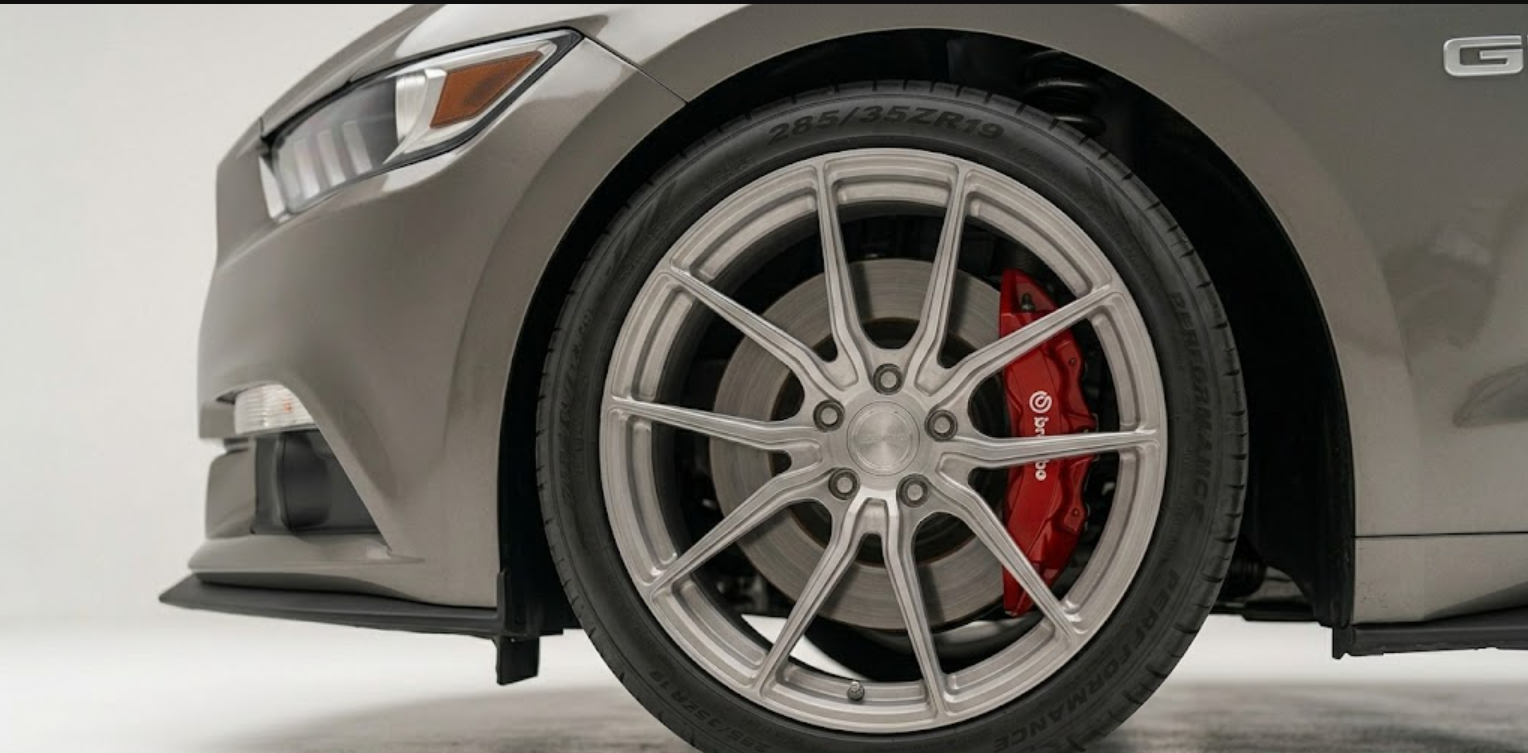
Any wheel and tire configuration that maintains hub-centricity, fits factory Brembo calipers, avoids strut contact at full lock, and keeps the tire’s section width within the fender’s aeroactive envelope will fit the GT (S550 or S650).
A 19×10 wheel with a +35 to +40mm offset, wrapped in a 285/35R19 performance tire, gives drivers the performance they want. It works incredibly well with most coilover and stock suspension configurations.
This brief window is no coincidence. When pulling the offset down to +35 and pushing the width to 10 inches, the wheel face pushes outward by approximately 20 to 25 millimeters.
This fills the gap in the fender without needing a spacer. Cross over that line, and you enter the realm of negative camber.
In the past, Mustang wheel sizes increased dramatically. Foxbodies and SN95s were originally fitted with 15-inch or 16-inch silver wheels. Stepping up a size tends to offer better handling but does not compromise ride quality.
The S550 and S650 of today call for 18-inch or 19-inch wheels as standard equipment to pass modern brakes. Therefore, the 19×10 combination remains the standard for today’s 19-inch silver wheels.
What Is The Effect Of Offset On The Driving Of A Mustang GT?
The scrub radius is the distance from the centerline of the tire to the steering axis, and it is directly affected by offset. On the street, a changed offset means your steering “hunts” or pulls at your hands when driving over an uneven road.
Among owners who suddenly find themselves driving a brand-new 28 offset compared to a 42 without a second thought, this remains the number one complaint.
You must take three types of offset into consideration:
- Zero Offset:The surface where the hub is mounted sits flush with the centerline of the wheel.
- Positive Offset:The surface that the hub attaches to sits on the front (face) of the wheel. The vast majority of factory Mustang wheels use a positive offset.
- Negative Offset:The hub mounting surface sits on the back (brake side) of the centerline, extending well out from the fender.
In addition to feel, a bigger scrub radius results in more torque steer when braking heavily, especially if you have compliant suspension bushings. On a car with 460 pound-feet of torque, the car will pull a little when you hit the throttle mid-corner.
The middle +35 offset stays fairly close to the factory scrub radius with a square setup. Visual flushness comes naturally, without the need for constant micro-corrections.
The Staggered Vs. Square Setup: Which One To Use?

A square setup (equal wheel width and tire size front/rear) emphasizes handling balance and tire life. A staggered setup (wider rear wheels and tires) maximizes traction on the rear for straight-line acceleration. It also provides a deeper, more aggressive look for the car.
The effect of the Mustang’s inherent understeer gets counteracted by square configurations, typically 19×10 ET35 wheels with 285/35R19 tires. Going square makes the front track identical to the back. This makes the front end feel lighter while sharpening turn-in response. Most significantly, it enables proper tire rotation to ensure even wear.
For a supercharged build, a staggered setup featuring a 19×10 front and a 19×11 rear with 305/35R19 tires provides great power delivery, especially when running staggered forged wheels. The additional 20 to 30 millimeters of tread width pushes the back end of the car into a solid launching position.
Remember, the front end of this Mustang usually only fits a 9-inch or 10-inch silver wheel without rubbing the struts or A-arms. The rear will easily take a 10.5-inch or 11-inch silver wheel. Note: IRS Cobras from 1999 to 2004 need a modified subframe bolt to fit 10.5-inch silver wheels.
| Setup Type | Handling Character | Tire Rotation | Best For |
| Square (19×10) | Balanced, reduces understeer | Full rotation | Track days, daily driving |
| Staggered (19×10/11) | Straight-line rear traction | No rotation | Supercharged builds, drag use |
What Are The “Hidden Costs” Of Aggressive Offsets?
An aggressive offset (between +25 and +30 on a 10-inch or greater wheel) creates a “poke” stance. This shows the sidewall and tread face of the tire outside the fender. It looks threatening, but it vastly increases the impact of road debris on lower rocker panels, the rear bumper, and door skins.
Tires act like paint strippers when pushed 12 millimeters beyond the fender lip. The solution requires either installing clear paint protection film (PPF) on the exposed surfaces, which costs several hundred dollars, or buying wider front fenders. Neither option is cheap.
In addition, potential “lug nut seating” problems occur if you set them up too aggressively. Conical (60-degree) lug nuts pair with many aftermarket wheels, while flat-seat lug nuts belong on factory Ford wheels. Do not mix them up, or the lugs won’t fit completely against the mounting surface on the wheel. When braking intensely, the stud may completely detach itself from the silver wheel.
The Ultimate Guide To Choosing Mustang Wheels
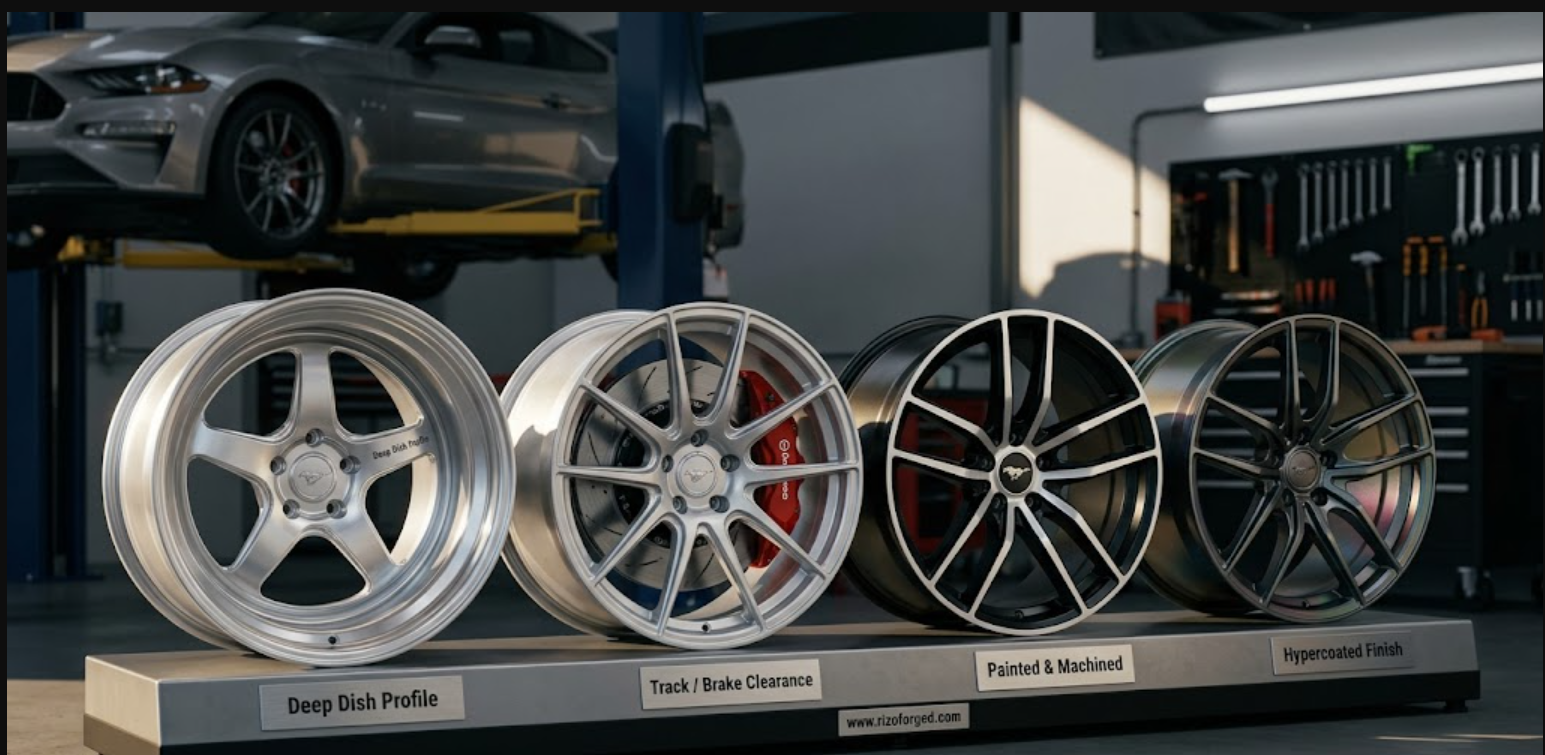
For a complete, step-by-step breakdown that balances aesthetics, performance, and maintenance, follow this guide.
1. Identify The Wheel Generation Compatibility
Matching wheels across generations of the Mustang is not as easy as simply matching bolt patterns. The geometry of the suspension has altered greatly over the past decades.
Foxbody & SN95 Fitment Rules:
- 1979 – 1993 (Foxbody):You can only use 1994-2004 wheels if the car gets modified from a 4-lug to a 5-lug hub.
- 1994 – 2004 (SN95):These physically fit 2005-2014 wheels, but they will nestle down low in the wheelhouse. They need a thick wheel spacer to achieve a normal look.
- 2005 – 2014 (S197):You may use SN95 wheels, but they will aggressively stick outside of the wheel well and cause excessive poke.
2. Understand How To Factor In Wheel Backspacing And Center Bore
The offset measures from the centerline, while the backspacing measures from the back edge of the silver wheel to the mounting hub.
Clearance Metrics:
- Backspacing Control:This controls the clearance between the inner suspension struts. You get this number when you drop a straight edge across the silver wheel bead and measure to the silver wheel face.
- Center Bore Importance:The 70.5mm (or 70.6mm in older models) center bore lets the wheel actually sit on the hub lip. This prevents sheer stress from being placed on the wheel studs.
3. Learn About Deep Dish Profiles And Standard Profiles
The design of the silver wheel face determines how it looks and how much grip it provides.
Profile Styles:
- Deep Dish Wheels:The outside lip sits recessed 2+ inches from the face and spokes of the wheel. This remains very popular in aggressive, wide-stance SN95 and S197 builds utilizing deep dish wheels.
- Standard Concave:The spokes push to the outermost side of the silver wheel to increase clearance for large aftermarket brake calipers.
4. Choose The Right Wheel Finish
The finished car will look the part, but the finish also determines the number of hours you will spend detailing your car on the weekend.
| Finish Option | Visual Aesthetic | Maintenance Required |
| Chrome | Super reflective and brilliant | High (requires frequent brake dust cleaning) |
| Clear Coat / Polished | Bare aluminum gleam | Highest (needs regular hand polishing and wax) |
| Painted & Machined | Two-tone, CD-like appearance | Low (highly durable clear coat protection) |
| Hypercoated | Dynamic liquid metal/black chrome | Low (durable and naturally shifts in light) |
Finish Options Detailed:
- Chrome:Triple-plated and super reflective. While very aesthetic, it is difficult to keep clean from pitting caused by brake dust.
- Clear Coat / Polished:No protective finish on the aluminum. It naturally oxidizes with age and requires the most maintenance, like hand polishing and sealant wax to protect your classic wheels.
- Painted & Machined:Coated with automotive-grade paint (like Anthracite, Black, or Silver). The faces of the wheels get shaved down to bare aluminum and clear-coated for a two-tone, CD-like appearance. Highly durable.
- Hypercoated:Sometimes referred to as liquid metal or black chrome. This special metallic clear coat varies in color depending on the light.
5. Specialized Drag Racing Setups
In drag racing, everything depends on mechanical grip and weight transfer in a straight line, which requires specific rubber.
Drag Configurations:
- Fats and Skinnies:A classic drag setup pairs slim 15-inch or 17-inch front wheels (for minimizing rolling resistance and weight) with wide 15-inch rear wheels.
- Sidewall Collapse:Lower sidewalls on smaller diameter silver wheels allow for oversized, taller tires. These buckle and collapse at a hard startup, cushioning the blow from the drivetrain and preventing immediate tire spin.
6. Track Safety And Configurations
Road racing requires lateral traction, heat control, and quick steering responsiveness.
Track Configurations:
- Square Stance:Autocross requires this for the car to turn through slaloms neutrally without pushing.
- High-Clearance Spokes:Track wheels must be designed to clear large 6-piston front brakes for repeated, high-heat braking.
7. Preserving And Safeguarding Your Investment
The natural enemies of aftermarket alloys are hot brake dust and winter road salt.
Care Protocols:
- Don’t clean a hot wheel! Rotors and clear coats warp when hot aluminum gets exposed to cold chemicals. This will permanently harm the clear coat.
- Acid-Free Cleaners:Use mild degreasers. Dust polished aluminum wheels with a good quality, hand-applied sealant wax when new to form a barrier against contaminants.
- OEM vs. Aftermarket Fitment:OEM center caps (like Ford Racing) and aftermarket center caps (like AmericanMuscle) both measure 2.5 inches in diameter but have different tab depths or outside diameters. They cannot be interchanged.
People Also Ask
What Bolt Pattern Does A Mustang GT Use?
All modern Mustang GTs have a 5×114.3mm (5×4.5 inches) bolt pattern. The lugs on aftermarket wheels almost always use a conical-seat, not the Ford flat-seat type.
Can I Use S550 Wheels On A 2024+ S650 Mustang GT?
Yes, they all feature the same bolt pattern, hub bore, and offsets. The S650 comes with an electronic drift brake and slightly tweaked fender liners, however, which could restrict clearance for tires more than 315mm wide. Carefully test fit ultra-wide combinations.
Should I Get Hub Rings For Aftermarket Wheels?
Absolutely. If you pair an aftermarket wheel with a center bore of 73.1mm to a Mustang with a center bore of 70.5mm, you create a gap. Hub-centric rings fill this space and prevent high-speed vibrations.
What Is The Best Offset For A Flush Look Without Rubbing?
The +35 offset is generally regarded as the optimum offset for a 19×10 wheel. It brings the wheel face close to the fender on most S550/S650 vehicles. It barely touches the fender and does not rub when using 285/35R19 tires.
Why Does My Mustang GT Pull Sideways After Installing New Wheels?
This is called tramlining. It is caused by a greater distance between the front tires or a lower offset. The steering axis of the tire sits closer to the road than the car’s steering, which makes the car eagerly follow road grooves.
Conclusion
Achieving ultimate harmony between form and function defines your customization journey. Finding ideal Mustang GT Wheels eliminates annoying highway tramlining and disastrous fender rubbing. Stick with trusted square setups to maximize driving pleasure. Visit RizoForged today to explore premium custom forged wheels that perfectly elevate your American muscle car to the next thrilling performance level.
 EN
EN  ES
ES  PL
PL  JA
JA  IT
IT